
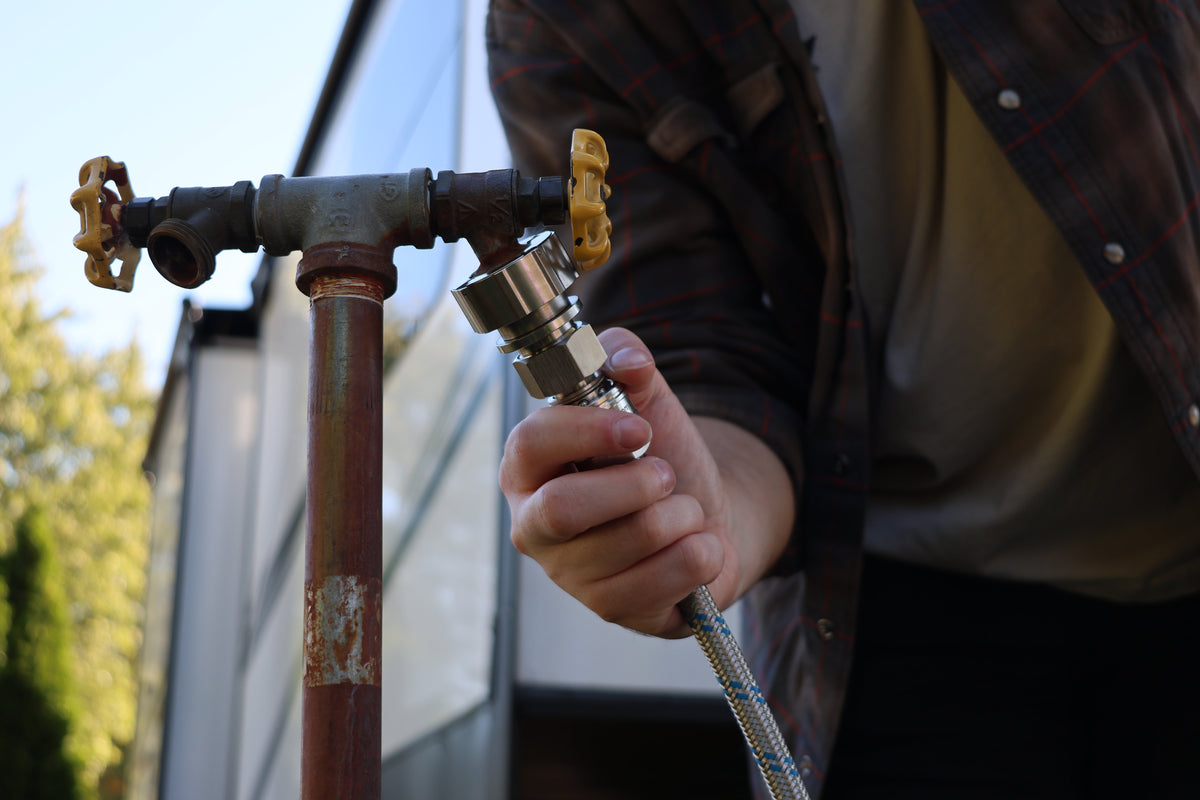
Campground water can come from a municipal supply, a regulated campground system, a private well, or another local source. Its treatment, mineral content, pressure, taste, and current conditions can change from one destination to the next. Before using campground water for consumption, confirm that the connection is designated as potable, check for active water advisories, and understand what your RV water system is equipped to address.
Start With the Campground Water Source
Many campgrounds receive water from regulated public systems. The U.S. Environmental Protection Agency classifies qualifying campgrounds as transient non-community water systems because they provide water to people who stay for limited periods. Other campgrounds may use private wells or smaller systems with different oversight and testing requirements. Two campground spigots can look identical while supplying water with very different characteristics.
Start by asking the campground:
-
Is the water connection designated as potable?
-
Does the campground use municipal water or a private well?
-
Are there any current boil, do-not-drink, or do-not-use advisories?
-
Has the system recently experienced a service interruption or pressure loss?
-
Is water-quality information available?
If a connection is marked non-potable, do not use it for consumption, cooking, brushing teeth, making ice, or filling a fresh-water tank.
Check the Hookup Before Connecting
The water source is only the beginning of the path. The spigot and surrounding area can also affect how water enters the RV.
Before connecting:
-
Confirm that the spigot is intended for potable water.
-
Inspect the connection for visible dirt, damage, or cross-contamination.
-
Allow the water to run briefly to flush standing water from the outlet.
-
Keep the end of the fresh-water hose off the ground.
-
Use a drinking water safe hose dedicated only to fresh water
-
Keep fresh-water equipment separate from sewer and black-tank equipment.
-
Inspect washers, screens, fittings, and quick connects before use.
Do not assume that clear water is suitable for every use. Many water-quality concerns cannot be identified by sight, smell, or taste.
Understand the Complete Water Path
Water does not move directly from the campground source to the faucet. It passes through a system that may include:
-
The campground spigot
-
Pressure regulator
-
Hose and fittings
-
Filtration system
-
Water softener
-
City-water inlet
-
RV plumbing
-
Water heater
-
Fresh-water tank
-
Faucets and appliances
Every component should be treated as part of the water path.
A filtration system can only treat the water that passes through it. It does not maintain the hose, plumbing, fittings, fresh-water tank, or water softener downstream. Those components still require routine inspection, cleaning, and manufacturer-recommended maintenance. A high-quality filter cannot compensate for a contaminated hose, poorly maintained tank, or connection that was never intended to supply potable water.
Choose Filtration Around the Water Concern
No single filter addresses every possible water-quality concern. Different technologies perform different jobs. A basic inline filter may help reduce sediment and improve taste or odor, depending on its media and verified claims. Multi-stage filtration separates those jobs across several purpose-selected cartridges.
A three-stage configuration may include:
-
Sediment filtration to reduce larger particulate load
-
Advanced filtration for finer particulates
-
Activated carbon to help improve taste and odor
Micron rating is only one part of the decision. A smaller micron number indicates finer particle filtration, but it does not automatically establish performance for dissolved chemicals, hardness minerals, or every microbiological concern.
The CDC recommends selecting water-treatment technology based on the specific substances of concern and checking the product label for its supported claims. The right system should clearly explain what each stage does and what evidence supports its claims.
What to Do During a Water Advisory
A filtration system does not override instructions from campground management, a water utility, or local health officials.
There are three common types of drinking-water advisories:
-
Boil-water advisory: Use commercially bottled water or follow the official boiling instructions.
-
Do-not-drink advisory: Do not use the water for consumption or food preparation.
-
Do-not-use advisory: Avoid using the water for any purpose identified in the notice.
The CDC states that water should still be boiled during a boil-water advisory even if it has passed through a home water filter. Advisories involving chemicals or toxins may require different actions because boiling does not address those concerns.
Follow the exact instructions provided by local officials. Do not rely on taste, odor, filtration, or previous experience with the campground to override an active advisory.
What if the Water Smells or Tastes Different?
An unfamiliar taste or odor does not identify the cause.
Chlorine taste may be associated with municipal treatment. A rotten-egg odor may involve sulfur compounds, the water heater, or conditions within the RV plumbing. Metallic taste may relate to the source, plumbing, or mineral content.
If water changes noticeably:
-
Stop using it for consumption until the cause is better understood.
-
Ask the campground whether other guests have reported the same issue.
-
Check for active advisories or recent maintenance.
-
Compare the water directly at the spigot and inside the RV.
-
Inspect the hose, filters, tank, water heater, and plumbing.
-
Replace filters when they reach their recommended service interval.
-
Follow the RV and component manufacturers’ maintenance instructions.
If the issue exists at the spigot, it likely originates before the RV. If it appears only inside the coach, inspect the onboard system.
A Practical Source-to-Sip Routine
Before using campground water:
-
Confirm that the connection is designated as potable.
-
Check for current water advisories.
-
Inspect and flush the spigot.
-
Connect a dedicated fresh-water hose.
-
Manage incoming pressure with an appropriate regulator.
-
Use filtration selected around your water goals.
-
Maintain the hose, filters, tank, plumbing, and softener.
-
Follow official instructions whenever water conditions change.
So, can you drink campground water? The better answer is conditional: verify the source, understand the current conditions, and use a water system engineered around the concerns you want to address.
Blu Technology™ approaches campground water as a complete Mobile Water Safety System instead of relying on one filter to address every concern. Multi-stage filtration helps reduce sediment and finer particulates while improving unwanted taste and odor. A water softener addresses hardness minerals such as calcium and magnesium. PURBLU® UVC provides an active microbiological treatment barrier that helps inactivate microorganisms after filtration. The CHI Filter™ is designed to help reduce iron and chlorine and hydrogen sulfide. Together these technologies address different water-quality concerns from source to tap. No system should replace confirming that the campground connection is designated as potable or following an active water advisory.
Campground water changes. Your process should not.
Share:
What Micron Rating Does an RV Water Filter Need?
GPM Explained: How Much Water Flow Does an RV Need?