
A micron rating describes the approximate size of particles a water filter is designed to capture. The smaller the micron rating, the finer the particles the filter can address.
Choosing an RV water filter is not as simple as selecting the smallest number available. The right micron rating depends on the water source, the substances you want reduced, the flow you expect, and how each filter fits into the complete system. For many RV applications, staged filtration provides the most practical approach: reduce larger sediment first, then move progressively toward finer filtration.
Understanding Micron Ratings
One micron is one-millionth of a meter. Common RV filtration levels include: 20 micron, 10 micron, 5 micron, and 0.2 micron.
Micron ratings may also be described as nominal or absolute.
A nominal rating generally means a filter captures a percentage of particles at the stated size. An absolute rating is held to a more defined particle-retention threshold.
A nominal 0.2-micron filter and an absolute 0.2-micron filter should not be assumed to provide identical performance. Review the efficiency percentage, supporting test data, and stated operating conditions before comparing filters. Micron size describes particle filtration. It does not independently establish performance for chemicals, dissolved minerals, hardness, taste, odor, or microbiological treatment.
20-Micron Filtration
A 20-micron filter is designed to capture relatively large particles such as visible sand, rust, and other coarse sediment. This rating is commonly used in an inline filter, reusable sediment screen, or first-stage pre-filter. Its purpose is to reduce larger debris before it reaches finer filters, plumbing components, or fixtures. A 20-micron filter generally creates less resistance than a finer cartridge and may maintain flow longer when a water source contains significant sediment. However, it should be viewed as coarse sediment protection rather than advanced filtration.
10-Micron Filtration
A 10-micron filter provides finer sediment filtration than a 20-micron filter while generally maintaining practical flow.
This rating is commonly found in compact inline filters and single-stage systems. Depending on the filtration media, the cartridge may address sediment alone or combine sediment filtration with activated carbon for improved taste and odor. A 10-micron filter can be appropriate when moderate sediment reduction is the primary goal and a compact system is preferred. The filtration media still matters. A 10-micron sediment filter and a 10-micron carbon filter may share the same micron rating while performing different functions.
5-Micron Filtration
A 5-micron filter captures finer sediment than typical 10- or 20-micron cartridges. It is often used as a dedicated sediment stage within a two- or three-stage system. Placing a 5-micron filter before advanced filtration or activated carbon helps reduce particulate load and protects the downstream cartridges. A finer filter may load more quickly when exposed directly to heavy sediment. This is why filtration stages should be arranged from broader to finer performance.
0.2-Micron Advanced Filtration
A filter rated down to 0.2 micron is designed to address much smaller particulates than conventional sediment cartridges.
This level of filtration must be evaluated alongside the filter’s nominal or absolute rating, test data, flow rate, construction, and supported reduction claims. A 0.2-micron rating does not mean the filter addresses every water-quality concern. It does not automatically reduce dissolved salts, hardness minerals, nitrate, PFAS, or every chemical. Those concerns may require activated carbon, reverse osmosis, water softening, UVC treatment, or another specifically tested technology..
Micron Ratings, Flow, and Certification
Finer filtration generally creates more resistance, but micron rating is only one factor affecting flow. Filter surface area, cartridge size, media construction, housing design, incoming pressure, and filter condition also affect GPM.
Two filters with the same micron rating may deliver different flow rates. Compare filtration performance and tested GPM together.
When evaluating a filter, confirm:
-
The exact product or system certified
-
Whether certification covers the complete assembly or a component
-
The performance claim supported by that certification
-
The tested flow and operating conditions
Micron rating explains particle size. Third-party certification and testing provide evidence for the specific performance claims being made.
Micron Filtration in the Blu Technology AR3
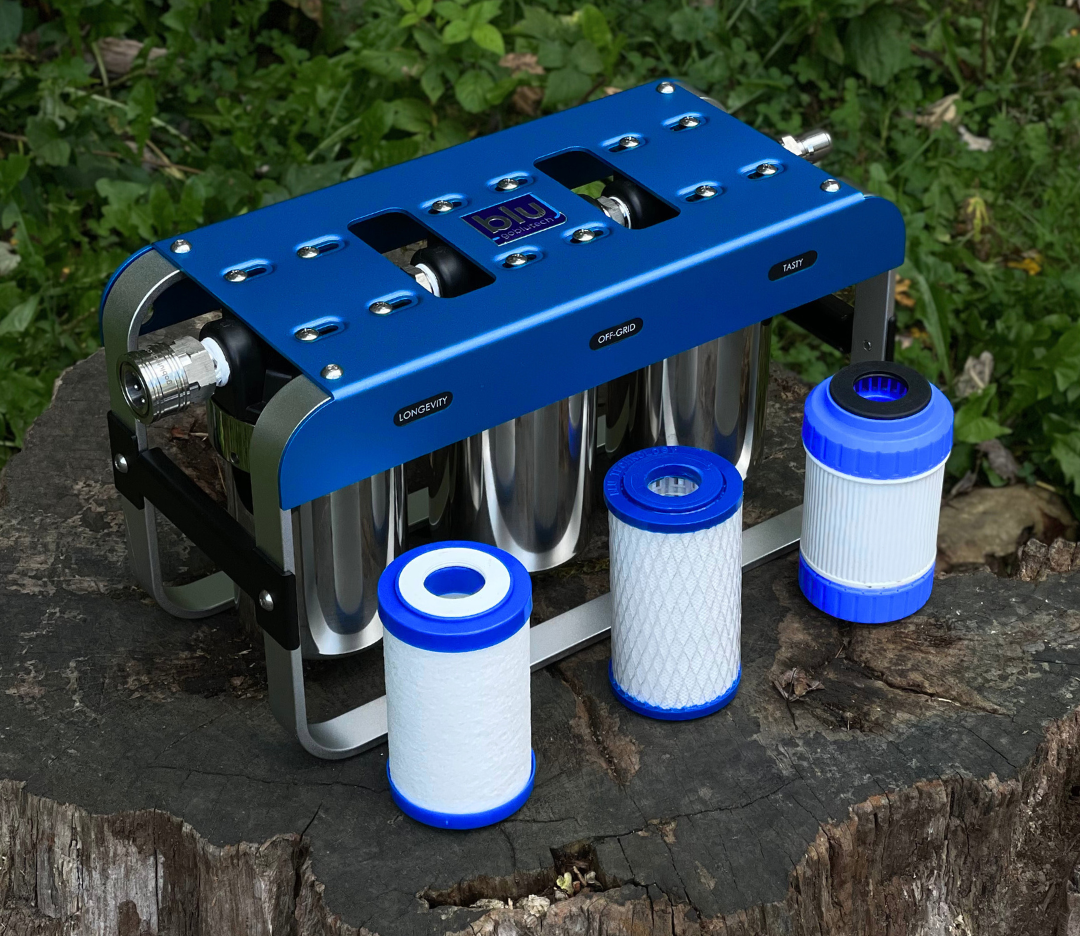
The Blu Technology™ AR3 is a three-stage RV water filtration system certified to applicable NSF standards and designed to balance advanced filtration with practical whole-RV flow.
Its coordinated architecture includes:
-
Sediment pre-filtration to reduce larger particulate load
-
OFFGRID™ Advanced Filtration rated down to 0.2 micron
-
Activated carbon to help improve taste and odor
The complete system gives each filter a defined function. The sediment stage protects the advanced filtration stage, while the carbon stage addresses supported aesthetic concerns. The AR3 uses stainless-steel canisters, heavy-duty quick-connect fittings, and ¾-inch garden-hose connections. It is designed to deliver 5.5+ GPM under the stated operating conditions.
The correct RV water filter is not automatically the cartridge with the smallest micron rating. It is a system that places the appropriate filtration technology at each stage, maintains practical flow, and supports its claims through testing and applicable third-party certification. Start with the water concern. Select the appropriate micron level. Then evaluate the filter media, nominal or absolute rating, tested flow, and complete system architecture.
Share:
September Featured Video: Drive Day Hydration with the Sleepy Adventurers
Can I Drink Campground Water?