
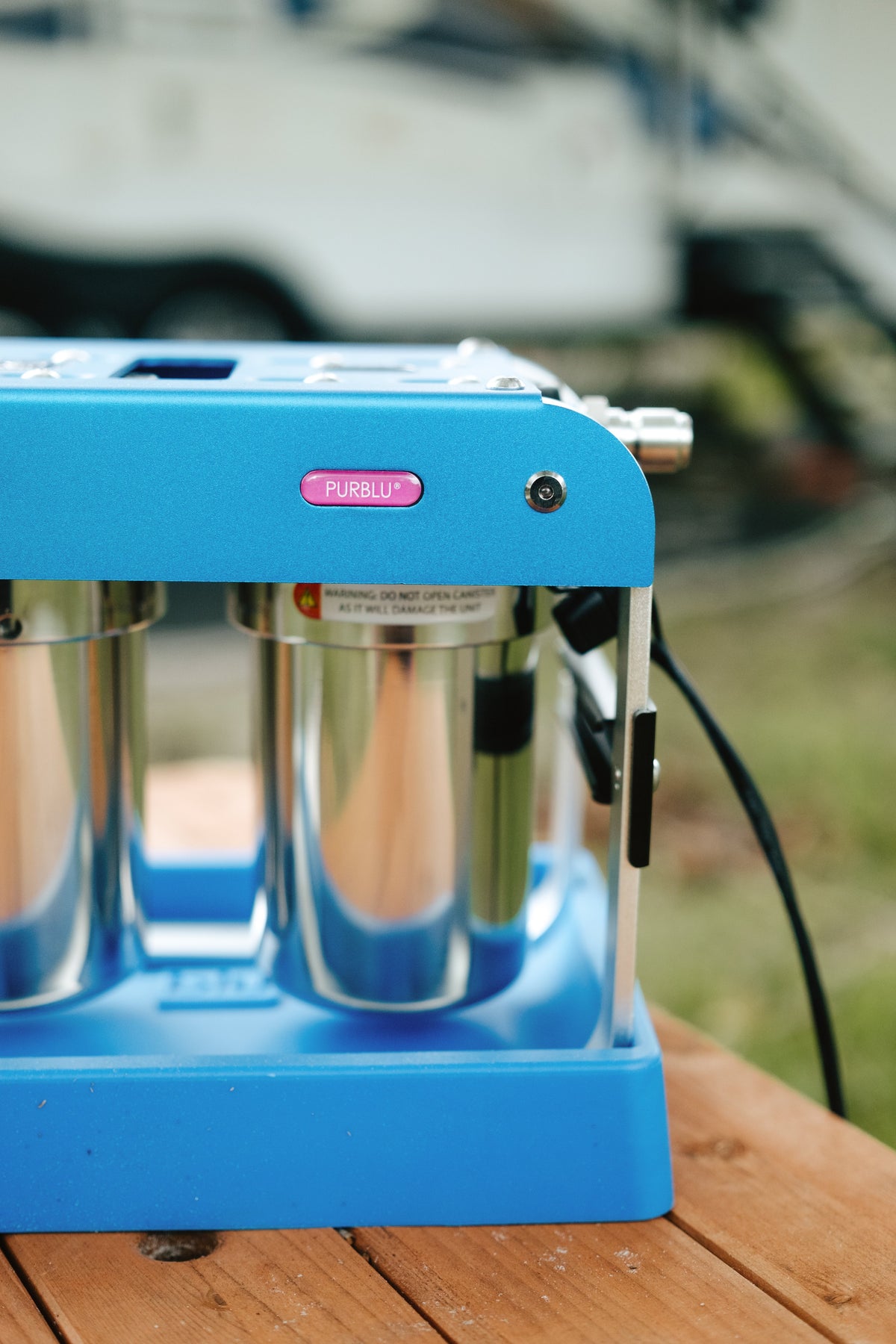
An RV water filter and a water purifier are not interchangeable. Filtration physically reduces particles and specific substances from the water. Purification provides an additional treatment barrier designed to kill microorganisms.
For a complete RV water system, filtration is the foundation. UVC purification can then add another layer of protection after the water has been properly filtered.
What Does an RV Water Filter Do?
An RV water filter passes water through media designed to reduce specific substances. Its performance depends on the filter media, micron rating, certification, flow rate, and complete system configuration.
Depending on the cartridge, filtration may help reduce:
-
Sediment and visible particles
-
Chlorine taste and odor
-
Certain microorganisms
-
Lead and other specific contaminants
-
Unwanted tastes and odors
A basic inline filter may combine sediment and carbon filtration in one cartridge. A multi-stage filtration system separates these functions so each stage can address a defined water concern. Filtration is a necessary first step because it improves water clarity and reduces material that could interfere with downstream treatment.
What Does an RV Water UV Purifier Do?
The term “water uv purifier” can describe several technologies. In RV applications, one option is UVC treatment. UVC uses ultraviolet light at a specific wavelength to disrupt the DNA or RNA of certain microorganisms as water passes through the treatment chamber. This helps prevent those microorganisms from reproducing.
UVC treatment does not physically remove sediment, chemicals, dissolved minerals, or unwanted tastes and odors. It also does not soften hard water. Its purpose is to provide a separate active-treatment barrier for certain microorganisms. That is why UVC should not be treated as a replacement for filtration.
A filter removes or reduces specific material from the water. UVC treats certain microorganisms that remain after filtration.
Why Does UVC Need Prior Filtration?
UVC performs best when the water reaching the treatment chamber is clear.
Sediment, cloudiness, color, and suspended particles can reduce the amount of UVC energy that reaches microorganisms. Particles may also create areas where microorganisms are partially shielded from the light.
Prior filtration helps prepare the water by:
-
Reducing sediment and suspended particles
-
Improving water clarity
-
Supporting consistent UVC exposure
-
Helping protect the treatment chamber
-
Allowing each treatment stage to perform its intended role
This is why system order matters. A typical multi-barrier arrangement is:
Water source → water filtration → UVC treatment → RV
Is an RV Water Filter Enough?
Filtration should be considered a core part of an RV water system. Campground water conditions can vary by location, season, source, and infrastructure. A properly selected filter helps address the specific substances covered by its performance claims before the water enters the RV.
Whether filtration alone meets your needs depends on:
-
The quality and condition of the source water
-
What you want reduced from the water
-
The filter’s verified performance claims
-
How the water will be used
-
The level of treatment you want
A UVC purifier is an additional treatment layer. It does not make filtration unnecessary.
When Does UVC Purification Make Sense?
UVC may be appropriate for RV owners who want an independent active-treatment stage in addition to filtration.
It may be especially valuable when:
-
Water sources change frequently
-
Source-water conditions are uncertain
-
The RV is used for extended travel
-
The owner wants a multi-barrier treatment approach
-
Water may be collected from approved sources with varying conditions
UVC performance depends on water clarity, flow rate, lamp output, exposure time, and system design. Review the complete product specifications rather than assuming that every UV device provides the same level of treatment.
How PURBLU® Adds Another Treatment Barrier
Blu Technology’s PURBLU® UVC system is designed to operate after filtration as an independent active-treatment stage.
The filtration system first helps reduce sediment and other substances according to the selected cartridges. PURBLU® then uses UVC LED technology to treat the filtered water for certain microorganisms before it enters the RV.
This creates a coordinated multi-barrier process:
-
5 Micron sediment filtration reduces larger particles.
-
Advanced 0.2 micron filtration addresses finer particles and specific substances.
-
Activated carbon helps improve taste and odor.
-
PURBLU® UVC provides an additional active-treatment barrier.
PURBLU® UVC does not replace filtration. Filtration prepares the water so the UVC stage can perform as intended. Together, the technologies address different water concerns within one engineered system.
Do You Need Both Filtration and Purification?
Start with filtration. It provides the foundation for reducing sediment and other identified substances while preparing the water for any additional treatment stage. Add UVC purification when you want another independent barrier for certain microorganisms.
The decision should be based on your source water, treatment goals, system configuration, and desired level of protection rather than how frequently you use the RV. A filter and purifier are not competing products. Filtration performs the essential first step. UVC purification builds on that foundation by adding another layer of treatment.
Share:
How to Choose an RV Water Filtration System
Why Did My RV Water Pressure Drop After Installing a Filter?