There's a moment every full-time RVer eventually has: the realization that the water you've been drinking, cooking with, and showering in for years might not be as clean as you assumed.
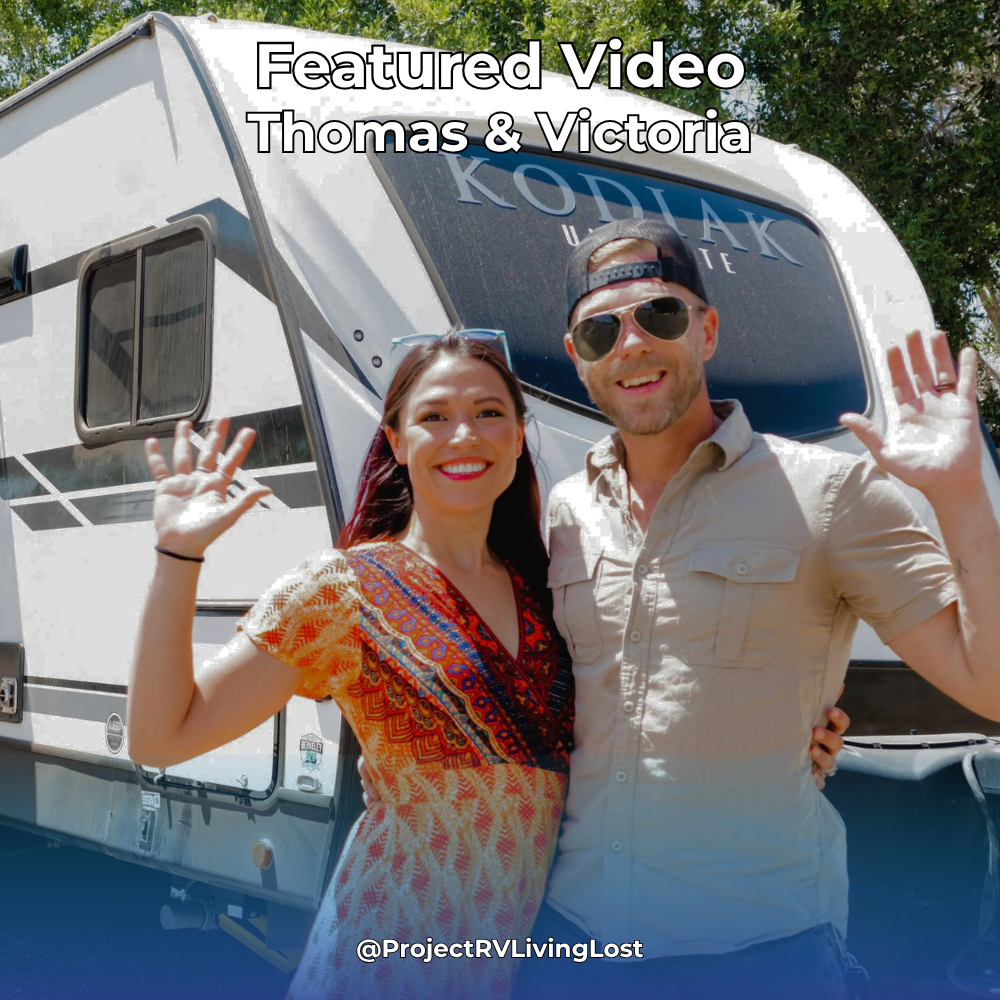
This month's featured video comes from Project RV: Living Lost, where Thomas and Victoria, who have been full-timing for almost six years, put the Blu Technology AR3 UVC to the test at three different water sources. Rather than taking the system's claims at face value, they ran a simple side-by-side comparison: no filter, their old inline filter, and the AR3 UVC. The results were hard to argue with. At every stop, contaminant levels dropped to nearly zero once the AR3 UVC was connected.
It's one thing to hear that a filtration system works. It's another to watch someone test it in real campgrounds, with real water, and see the difference for themselves. Victoria, who admits she is not a fan of drinking straight from the tap, did her own side by side taste test between their old filtered water and water run through the AR3 UVC. Her verdict was immediate: the old water still carried an unwelcome taste she recognized right away, while the AR3 UVC left nothing behind to notice.
Easy to Install, Easy to Trust
Beyond the water quality itself, Thomas and Victoria wanted to know if the AR3 UVC would actually hold up to full-time RV life, where storage space and setup time matter as much as performance. So they timed themselves. After walking through the full installation once, Victoria set the system up again from scratch using only the quick connects, this time in under 40 seconds.
That kind of ease matters more than it might seem. For full-timers, a water system that takes real thought to set up becomes a chore fast. One that clicks into place in under a minute, and stores away in its own compact carrying case afterward, is the kind of upgrade that actually gets used every single stop.
Seeing Is Believing
What stands out most about this video is the willingness to actually test the claim instead of just repeating it. Thomas and Victoria took a basic test kit to their home base park, a North Carolina mountain campground, and a North Carolina coastal spot. Each time, the water tested noticeably better after running through the AR3 UVC, and at the mountain park in particular, they were surprised by just how much contaminant was in the water to begin with.
That kind of hands-on verification means a lot more than a spec sheet ever could. It's the difference between trusting a product because you were told to and trusting it because you saw it happen.
What Filtration Can (and Can't) Do
One of the things we appreciated about this video is the honesty. Thomas and Victoria didn't just list the wins. They also pointed out that the AR3 UVC isn't a water softener, so hard water still needs a separate solution, and that the UV purification stage requires power, meaning boondockers get full filtration but not full purification without it.
That kind of clarity matters. Knowing exactly what a system handles, and what it doesn't, is how RVers make informed decisions about their setup instead of just assuming one product will solve everything.
Thomas also pointed out something worth sitting with. The cleaner water wasn't the only difference he noticed. His skin and hair felt better after showers too, a small but telling sign of just how much daily life is touched by something as easy to overlook as water quality.
Project RV: Living Lost put six years of water quality assumptions to the test in a single video. Most RVers aren't skipping water filtration on purpose. It just isn't something that crosses your mind until you actually test the water you've been living on. Sometimes the biggest upgrades aren't about adding more to your rig. They're about finally checking whether what you already trust is doing its job.
Here's to cleaner water, wherever the road leads next.
Share:
June Featured Video: Living Phase 2 Highlights a Smarter RV Water Setup
One Dial, No Mess: A Guide to the SMART CAP and SMART CAP Universal Kit